- NOT JUST EXPRESS,IT'S E-BEST!
- yuliaaa@ebicargo.cn
- 400-8669-400


International logistics agency, as a key link connecting global trade, has an evolutionary history closely intertwined with international trade and technological innovation. From the emergence of international logistics in the 1950s to the comprehensive penetration of digitization, intelligence, and greenness today, the role of international logistics agents has been constantly upgraded, becoming the core force driving the efficient operation of global supply chains.
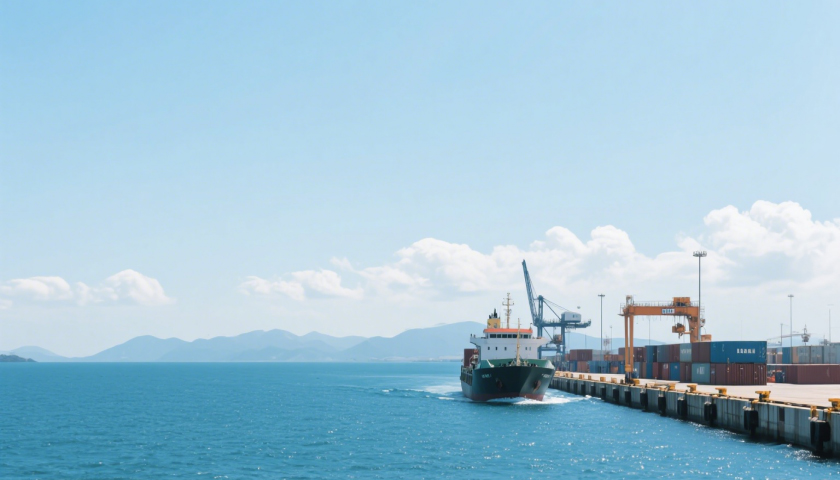
In the early days, international logistics agents mainly undertook simple cargo transportation agency functions, relying on traditional transportation methods such as sea and air freight to provide basic booking and customs clearance services for import and export enterprises. In the 1980s, with the popularization of container transportation and the application of electronic data interchange (EDI) technology, international logistics agents began to transform towards informatization, greatly improving logistics efficiency through standardized documents and real-time data sharing. During this period, international logistics agents were not only "movers" of goods, but also "integrators" of trade information, helping companies reduce communication costs and shorten transportation cycles.
Entering the 21st century, the explosive growth of globalization and cross-border e-commerce has brought unprecedented opportunities and challenges to international logistics agents. On the one hand, after China's accession to the WTO, the scale of goods trade imports and exports has continued to expand, with the total import and export value exceeding 43.85 trillion yuan in 2024, a year-on-year increase of 5%, driving the size of the international logistics agency market from 1.5 trillion yuan in 2016 to over 3 trillion yuan in 2023. On the other hand, international giants such as Deutsche Bahn and DHL occupy the high-end market with their global network and technological advantages, while Chinese local enterprises achieve differentiation and breakthrough through deepening their segmentation fields and laying out overseas warehouses. For example, the opening of the China Laos railway cold chain special train has enabled Laos fruits to reach Chongqing in China in seven days. It is precisely the precise optimization of the regional supply chain by international logistics agents.
Currently, international logistics agents are undergoing a profound transformation from "transportation intermediaries" to "supply chain integration service providers". Digital transformation has become the core driving force: IoT technology enables full process visualization and tracking of goods, digital twin technology simulates and optimizes transportation routes, smart contracts automatically execute customs clearance and settlement processes, and build an "unmanned" logistics network. Taking a 3C product seller as an example, through the digital platform of international logistics agents, real-time information on the arrival of goods can be obtained, and replenishment can be arranged in advance, resulting in a significant increase in peak season sales. At the same time, green and sustainable development has become a consensus in the industry. The implementation of EU carbon tariffs has prompted companies to adopt electric trucks and optimize packaging materials. International logistics agents have introduced low-carbon transportation solutions to help customers reduce carbon emissions and enhance brand image.
From the camel caravan of the Silk Road to the intelligent warehouse of cross-border e-commerce, international logistics agents are the "behind the scenes heroes" of trade globalization. Faced with the challenges of technological iteration, green transformation, and supply chain restructuring, only with innovation as the sail and cooperation as the propeller can we break through the waves in the global logistics landscape and inject lasting momentum into the prosperity of international trade.
